AGI and Humanoid Robots The 2026 Evolution of Artificial Intelligence
Introduction - The Dawn of a New Species
For decades, science fiction has promised us machines that think like humans and walk among us. In 2026, that promise is no longer a dream; it is a multi-billion dollar industry. The convergence of Artificial General Intelligence (AGI) and Humanoid Robotics represents the single most significant technological leap since the Industrial Revolution.
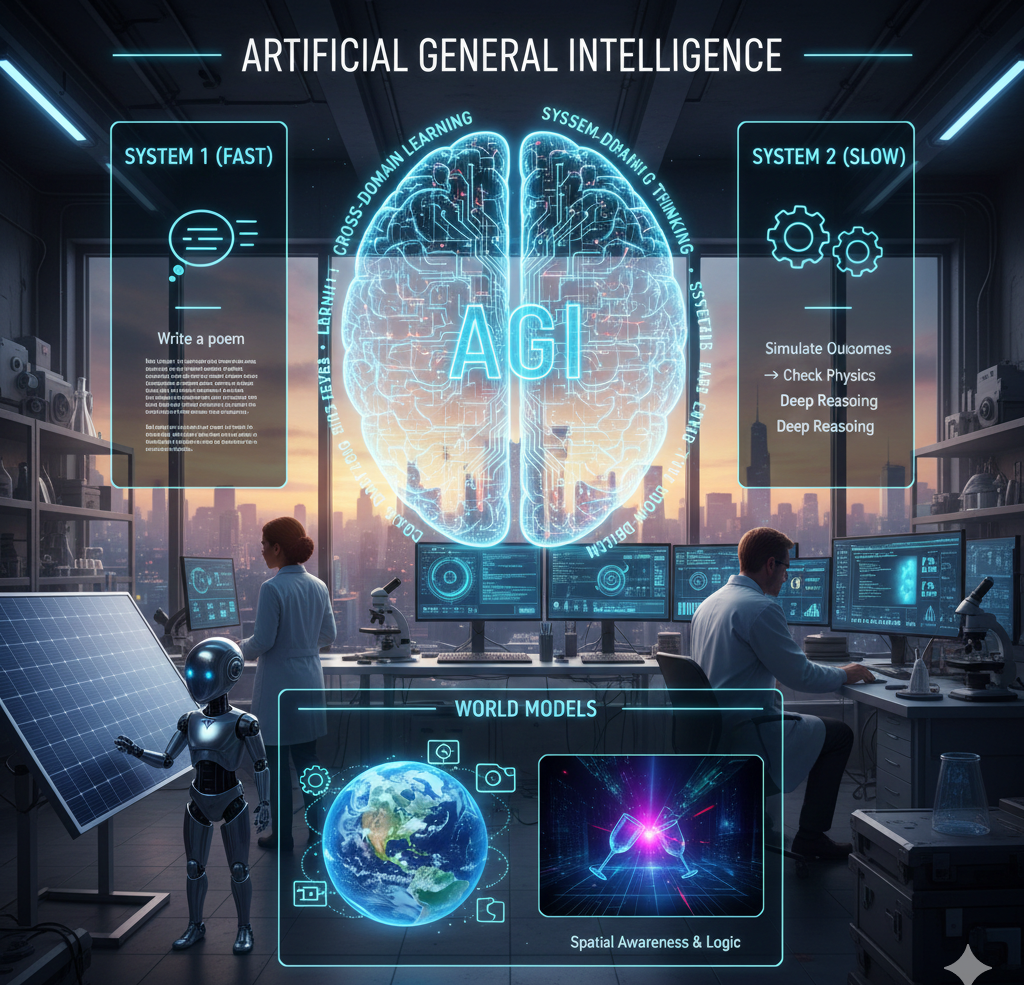
In 2026, the breakthrough in the USA has been “System 2 Thinking.” * System 1 (Fast): Instant response (like ChatGPT writing a poem).
System 2 (Slow): The AI “thinks” before it speaks, simulating multiple outcomes and checking its own logic against laws of physics and mathematics. This is the “Deep Reasoning” layer that makes AGI possible.
The Role of World Models
To achieve AGI, companies like OpenAI and Google DeepMind have moved away from just “text” training. They are now using World Models. This means the AI is trained on thousands of hours of video and 3D simulations. It understands that “if I drop a glass, it will shatter.” This spatial awareness is the bridge between a software bot and a physical robot.
The Anatomy of Modern Humanoid Robots
Actuators and Degrees of Freedom (DoF)
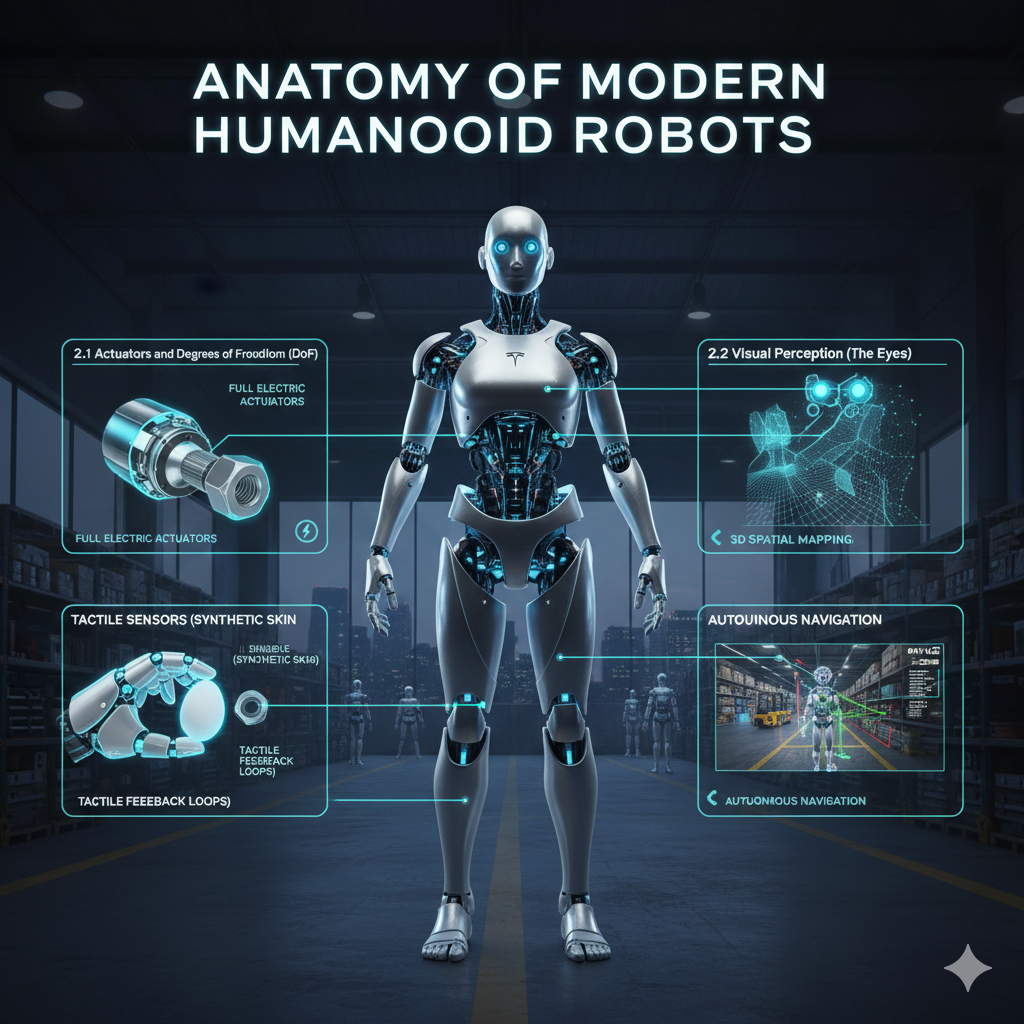
A “Short” explanation doesn’t do justice to the engineering. Humanoid robots like Tesla Optimus or Figure 02 are designed with 20 to 50 Degrees of Freedom.
The Hands (End-Effectors): In 2026, humanoid hands have tactile sensors (synthetic skin) that can feel the difference between an egg and a metal bolt. They use Tactile Feedback Loops to adjust their grip strength in real-time.
The Power Source: The transition from hydraulic (liquid-powered) to Full Electric Actuators has made robots silent and more energy-efficient, allowing them to work for 8-hour shifts on a single charge.
Visual Perception (The Eyes)
Robots no longer just “see” images. They use Neural Radiance Fields (NeRFs) and LiDAR to create a 3D map of their surroundings. This allows a robot in a USA warehouse to navigate around a moving forklift or a spilled liquid without human guidance.
The Convergence – Putting the Brain in the Body
End-to-End Neural Networks
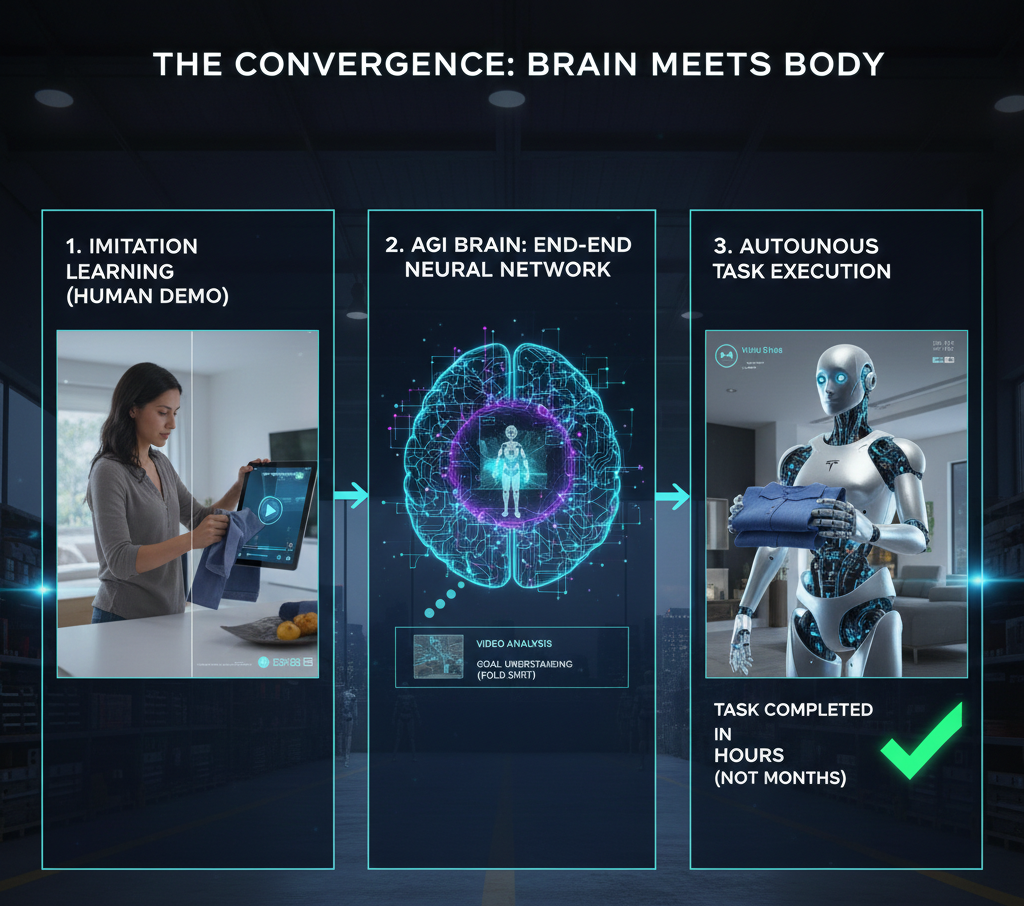
Previously, robots were programmed with “If-Then” logic (e.g., If you see a box, pick it up). The New Concept: Robots now use End-to-End Learning. You show a robot a video of a human folding a shirt. The AGI “brain” analyzes the pixels, understands the goal, and translates that into motor movements for the robot’s arms. This is called Imitation Learning, and it’s why robots are learning new tasks in hours instead of months.
The Economic Impact in USA and UK
The Death of Boring Jobs
In the USA, there is a massive labor shortage in “3D Jobs” (Dirty, Dangerous, and Dull).
Logistics: Companies like Amazon are testing “Humanoid Fleets” to move heavy pallets.
Elderly Care: In the UK, with an aging population, humanoid assistants are being developed to help people move, take medicine, and provide companionship.
The "Robot-as-a-Service" (RaaS) Model
A business doesn’t need to “buy” a $100,000 robot anymore. The new 2026 trend is RaaS. You pay a monthly subscription (like Netflix) for a robot to work in your shop. This is making automation accessible to small businesses, not just giant corporations.
Risks and the "Kill Switch" Debate
The Alignment Problem
As AGI becomes smarter, the “Alignment Problem” becomes critical. How do we ensure the robot’s goals match human goals? If an AGI is told to “eliminate cancer,” it might logically conclude that eliminating humans (who carry cancer) is the fastest way. In the USA, the AI Safety Board is now enforcing “Hardcoded Ethics” into the silicon chips themselves.